
My Journey with Mindfulness and Biofeedback
What does inner balance mean to you? For me, it evokes an image of an old-fashioned scale with two silver plates hanging from a central beam. As one side shifts under weight, there’s movement, then steadiness—until the process repeats. This balance is a metaphor for life: constant adjustments between movement and calm.
I often seek that steadiness—a sense of being centered, aligned with my core values, and acting with love, patience, and support for others – my inner balance. But as a CEO, mom of four, wife, daughter, sister, and friend, maintaining calm amidst life’s demands is challenging. I can be overcome by stress, intensity, impatience, and not my best self. Even though I’m aware I’m out of balance, returning to steadiness isn’t always easy.
The Role of Mindfulness in My Life
Seven years ago, I turned to mindfulness to manage stress, and it has profoundly impacted my life. Practices like breath work and meditation help me find calm and clarity. My favorite resources include the Waking Up App by Sam Harris (try the 30-day intro course), Dan Harris’s teachings, and Mindful Leader courses like MBSR (Mindfulness-Based Stress Reduction). Recently, I’ve discovered a new tool: InnerBalance by HeartMath+, which has taken my practice to a new level.
What Is Biofeedback?
Biofeedback is a therapy that increases awareness of physiological functions, such as heart rate, breathing, and muscle tension. With this awareness, we can consciously monitor and manage our thoughts, emotions, behaviors, and physical responses, promoting better health.
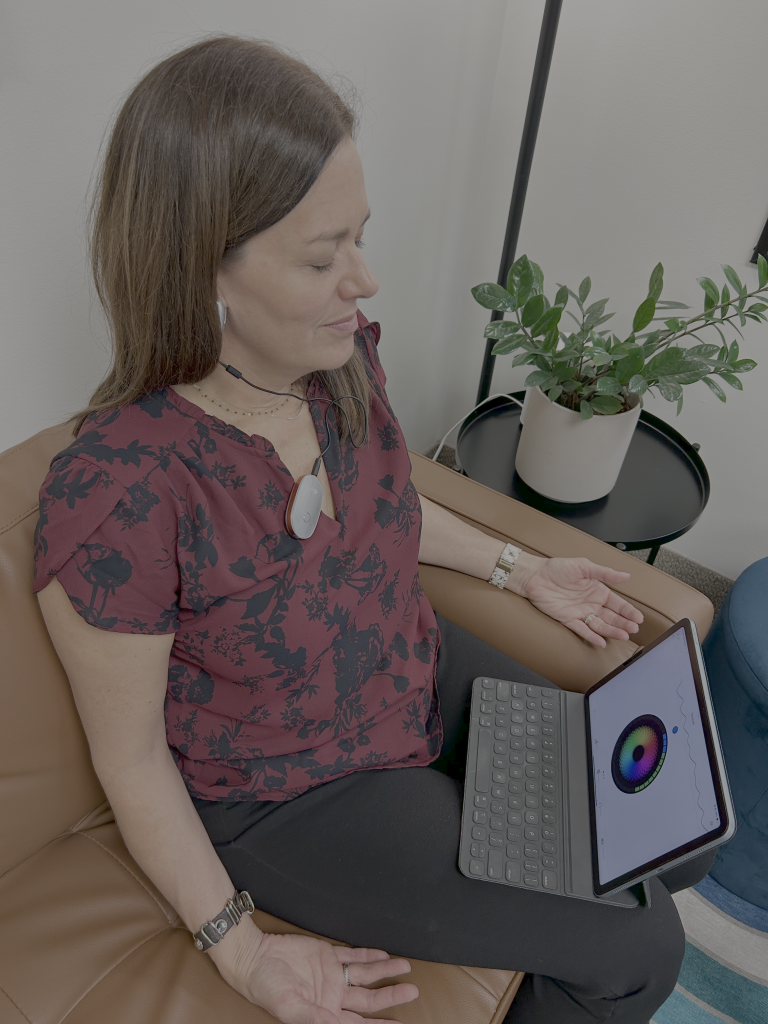
The InnerBalance system includes a small sensor clipped to your ear and an app that measures your heart rate variability (HRV)*and pulse. During practice, the app provides feedback on your coherence level—a measure of physiological harmony or a scientifically measurable state characterized by increased order and harmony in our mind, emotions, and body – inner balance!
It uses three indicators:
- Green: High coherence
- Blue: Medium coherence
- Red: Low coherence
By focusing on heart-centered breathing and cultivating positive emotions, you can intentionally improve your coherence and overall well-being.
My Experience with InnerBalance
During my first session, I followed the app’s guided breathing and quickly reached high coherence (green). Curious about its accuracy, I let my mind wander to a stressful challenge. Within seconds, my coherence dropped to medium (blue), then low (red). Amazed, I refocused on heart-centered breathing—visualizing peace on the inhale and love on the exhale—and returned to high coherence. This immediate feedback helped me recognize how quickly my thoughts and emotions influence my body and what my version of inner balance feels like.

The Science of InnerBalance
HeartMath studies involving over 14,000 participants showed improvements in mental and emotional well-being after 6–9 weeks of practice. Reported benefits include better sleep, reduced anxiety and anger, and enhanced vitality. I’ve noticed increased joy and calm in my daily life, helping me stay balanced in challenging moments. Over time, this practice may also improve my resting HRV, an essential marker of longevity.
Breathing: The Secret to Life
Mindful breathing is a powerful tool for achieving inner balance. With tools like InnerBalance, you can deepen your practice and enhance your well-being. It may sound futuristic, but this innovative approach has made a tangible difference in my life—and it might do the same for you.
For more on the science of Heartmath, click here. And, for more information about purchasing a sensor, click here.
*Note: Heart rate variability (HRV) is the change in the time between heartbeats measured in milliseconds. It is controlled by our autonomic nervous system which is the balance between “fight-or-flight” and “rest-and-digest.” In general, a higher HRV represents better heart health or cardiovascular fitness and can also indicate how well your body handles stress and your overall well-being. Many things, including poor diet, lack of sleep, dysfunctional relationships, or feeling isolated, can disrupt your HRV. It is best measured when averaged over 3-5 minutes.